The secret world under Vienna's subway
Under Vienna's streets hides a fascinating traffic world. Find out how the Wiener U Bahn was created, why the ground was frozen under the Danube Canal and what happens 35 meters below the city.
The Hidden World of the Vienna Underground
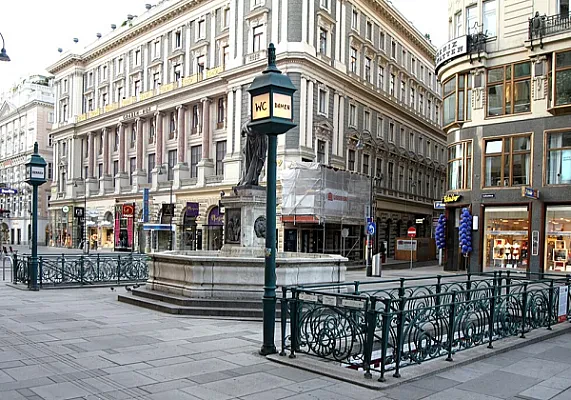
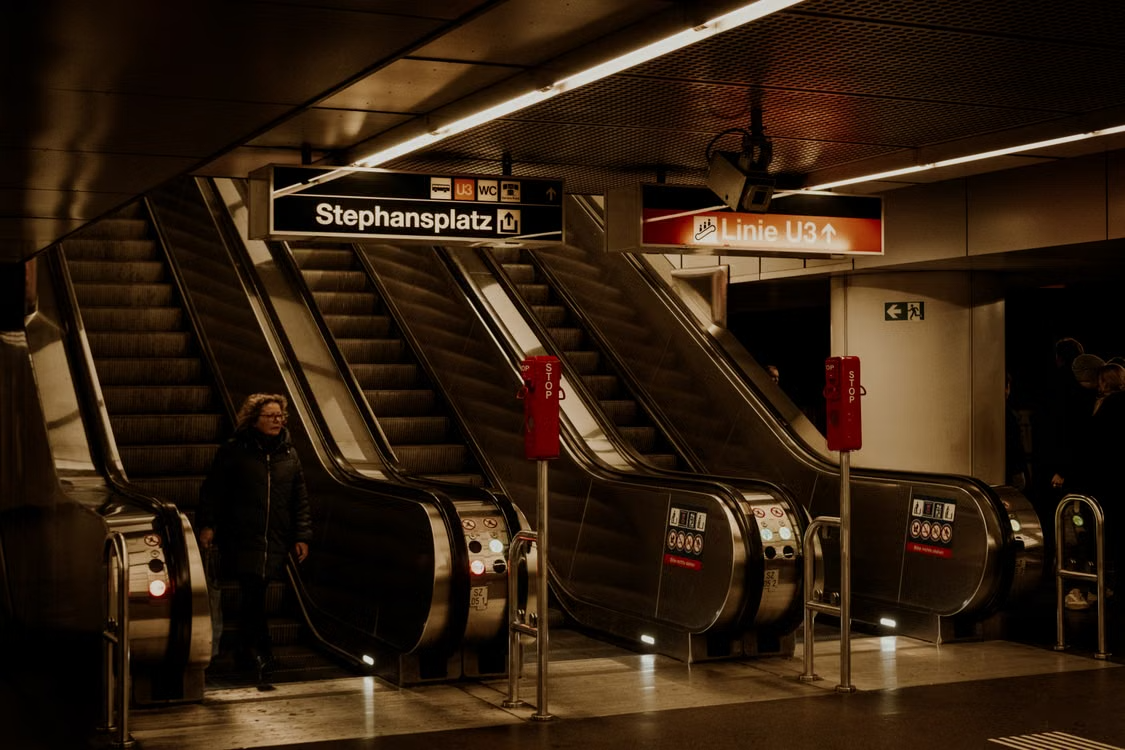
You board the subway at Stephansplatz, drive through a dark tunnel for a few minutes and reappear somewhere else in Vienna. Very normal. Hardly anyone thinks about what is actually between the road surface and the platform. Old cellars, foundations, canals, archaeological layers and partly buildings that are significantly older than the subway itself.
Under Vienna there has long been a second traffic level. And their story is more surprising than one would suspect.
How Vienna began to build under the city
The decisive decision for the Vienna U Bahn Grundnetz came on January 26, 1968. A year later, on 3 November 1969, construction work began on Karlsplatz. On 25 February 1978, the first completely newly built U1 line between Karlsplatz and Reumannplatz was finally opened.
The construction in the direction of Stephansplatz was particularly exciting. For the tunnel between Karlsplatz and Stephansplatz, a sign machine was used, which soon got a very suitable nickname: the Vienna Mole. The tunnel, which is about 680 meters long, was opened in just 76 days. Partially it was necessary to work under overpressure because the soil conditions were difficult.
It became really interesting when you dug deeper next to St. Stephen's Cathedral. Under the present Stephansplatz historical house foundations, old cellars and other remains of the former Vienna came to light. The works also examined traces of the former Maria Magdalena chapel and historical burial sites. The construction of the subway thus simultaneously became a journey through several centuries of Viennese city history.
The Cathedral itself also had to be closely monitored. As early as 1971, an independent engineer was used to control the safety measures. Automatic measuring devices registered vibrations in the cathedral. In case of danger, the responsible engineer could have stopped the construction work.
Part of the Vienna U Bahn is over 100 years old
Not every Viennese subway line was created only from the 1970s. Parts of today's U4 and U6 go back to the historic Wiener Stadtbahn. Some of their plants date back to the late 19th century.
Therefore, along these lines one encounters the architecture of Otto Wagner to this day. Station buildings, viaducts and other elements of the former light rail system were later transferred to the modern transport network. If you are travelling with U4 or U6, you drive partly through transport infrastructure, the history of which goes back several generations.
Particularly unusual was the U Bahn construction during the expansion of the U2 at the Schottenring. There, tunnels had to be created directly under the Danube Canal. The problem was the water-rich soil. The solution sounds almost incredible: the substrate has been frozen.
Initially, liquid nitrogen with a temperature of minus 196 degrees Celsius was used. The frozen soil was then kept stable with a cold salt solution. This created a frozen area that retained water and secured the soil. Only then could the tunnels be safely broken out. In the middle of Vienna, a part of the underground was temporarily frozen so that subway trains could later travel there.
35 meters below Vienna
Today, construction continues under Vienna. With the expansion of U2 and U5, a new level of traffic is created under existing roads, buildings, lines and underground lines.
It goes particularly deep at the future station Neubaugasse. The new U2 platforms are built about 35 meters below the road surface. This will make Neubaugasse the lowest underground station in Vienna in the future. 35 meters is about the height of a ten-story house, just down.
A huge tunnelling machine was used for large parts of the new tunnels. Her name is Debohra. The machine is 127 meters long, weighs more than 1,300 tons and consists of around 27,000 individual parts. Under favourable conditions, it was able to produce up to ten meters of tunnels per day.
While Debohra was working, the erupted material was removed. Directly behind it, the finished tunnel tube made of concrete elements was already created. In 2026, the tunnelling work for this construction phase was completed. The two new U2 tunnels between Matzleinsdorfer Platz and Augustinplatz together reach a length of around 4.2 kilometres.
Meanwhile, life on the surface just goes on. People go shopping, cars drive through the streets and a few meters away, guests sit in the coffee house. Deep below, a new subway is being built.
 A city under the city
Perhaps this is exactly what is fascinating about the Vienna U Bahn. We use them all the time, but see only a small part of what is under our feet.
At Stephansplatz, the building led through centuries-old city history. Parts of U4 and U6 are based on infrastructure from the time of Otto Wagner. Under the Danube Canal, the ground had to be artificially frozen and under the Neubaugasse a station is built about 35 meters deep under the city.
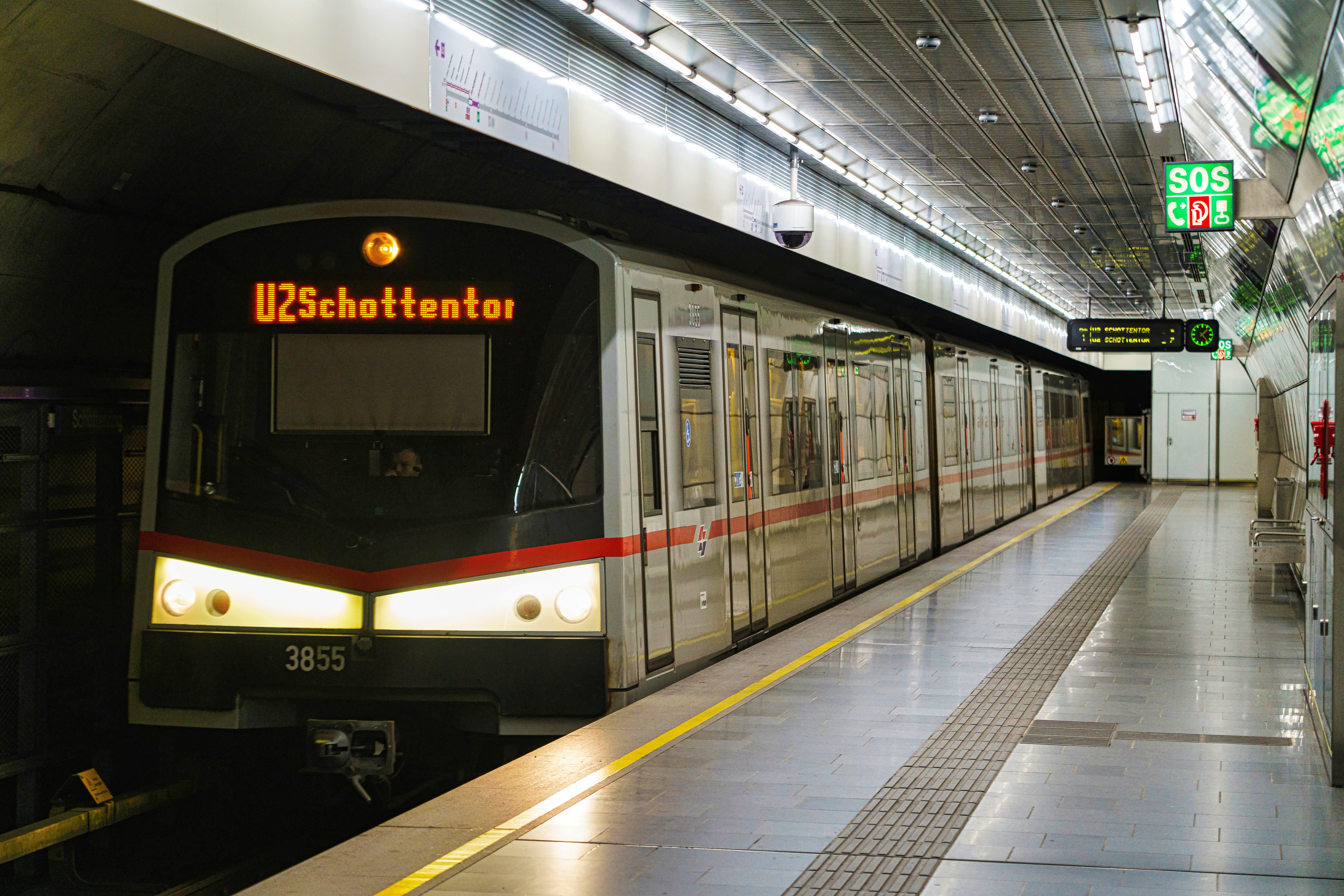
In the future, this underground world will become even larger. With the U5 Vienna gets for the first time a fully automatically operated subway line. According to the current timetable, the U5 between Karlsplatz and Frankhplatz as well as the extended U2 until Matzleinsdorfer Platz will go into operation in 2030.
The Wiener U Bahn is therefore much more than a fast way from A to B. It is a huge building that runs through historical layers, old infrastructure and the modern underground of the city. On the next boarding, it may be worth a short thought: Under Vienna, there is not just a subway. Down there is a rather large piece of Viennese city history.
Sources: City of Vienna, Wiener Linien, historical City Hall correspondence of the City of Vienna and official information on the expansion of U2 and U5.