From the mountain to the glass - this is how the Viennese water travels
Where the Vienna tap water really comes from
You turn on the faucet in Vienna and a few seconds later a glass of fresh drinking water stands in front of you. What you hardly notice is the amazing journey that part of this water has already behind it. The Viennese water comes mainly from sources in the Lower Austrian and Styrian Alps. Depending on the origin, it covers up to 180 kilometers. And perhaps the most surprising thing is that it needs practically no pumps for the way from the mountains to Vienna.
This has worked for more than 150 years and is one of the most exciting technical systems in the city.
Why Vienna brought its water from the Alps
Mid-19. In the 19th century, clean drinking water was anything but a matter of course in Vienna. The supply was long via wells and smaller water pipes. As the population grew, however, the problems intensified. Contaminated water contributed to the spread of cholera and typhoid fever, among other things.
In 1864, the Vienna Municipal Council therefore decided to build the first Vienna High Source Line. A central role played by the geologist and politician Eduard Suess. Between 1869 and 1873 the pipeline, several water tanks and large parts of the necessary distribution network were created. On October 24, 1873, the first Hochquellenleitung was officially opened. At the same time, the Hochstrahlbrunnen at Schwarzenbergplatz went into operation.
But Vienna continued to grow. In order to provide enough water for the increasing population, a second high spring line was built between 1900 and 1910. It was opened on December 2, 1910. This resulted in a supply system that still forms the backbone of the Vienna drinking water supply.
From the mountain to the Wiener Wasserhahn
The water of the first high spring line comes from the area of Schneeberg, Rax and Schneealpe. From the furthest source to Vienna it is about 150 kilometers. The water takes about 24 hours to reach the rose hills. The line can deliver around 220 million liters of water every day.
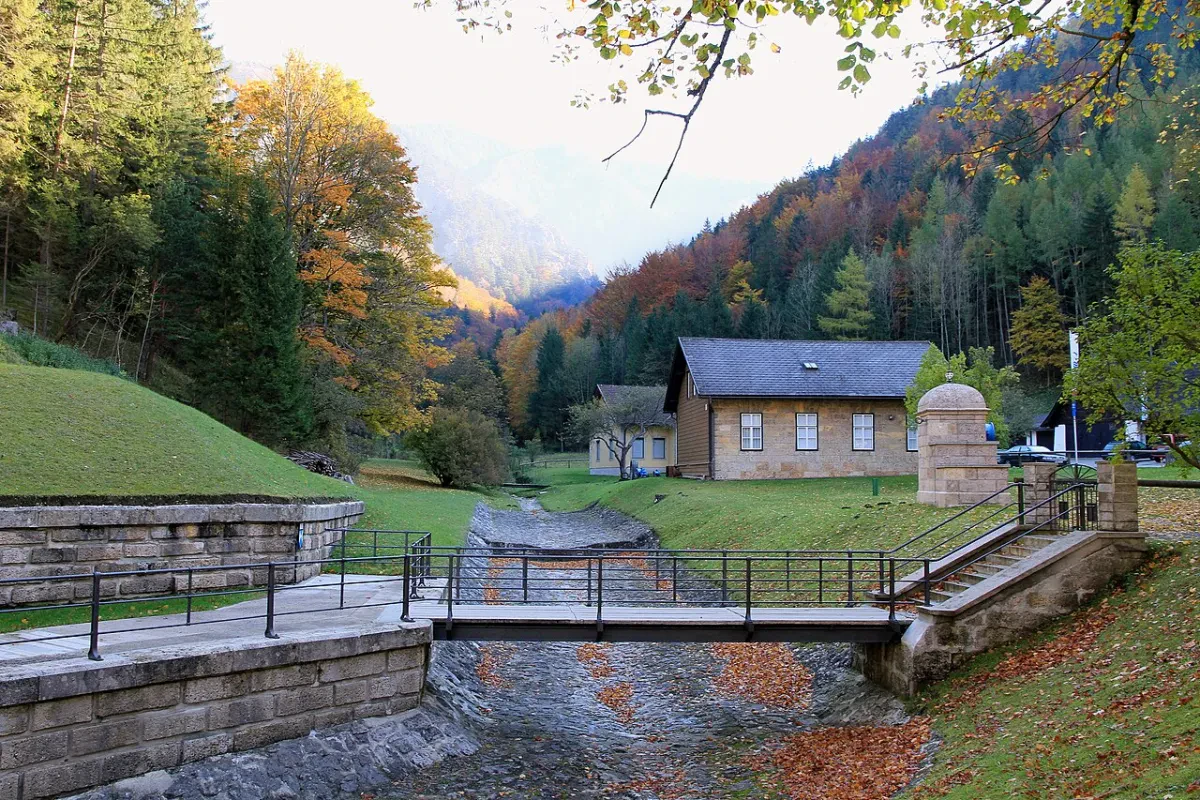
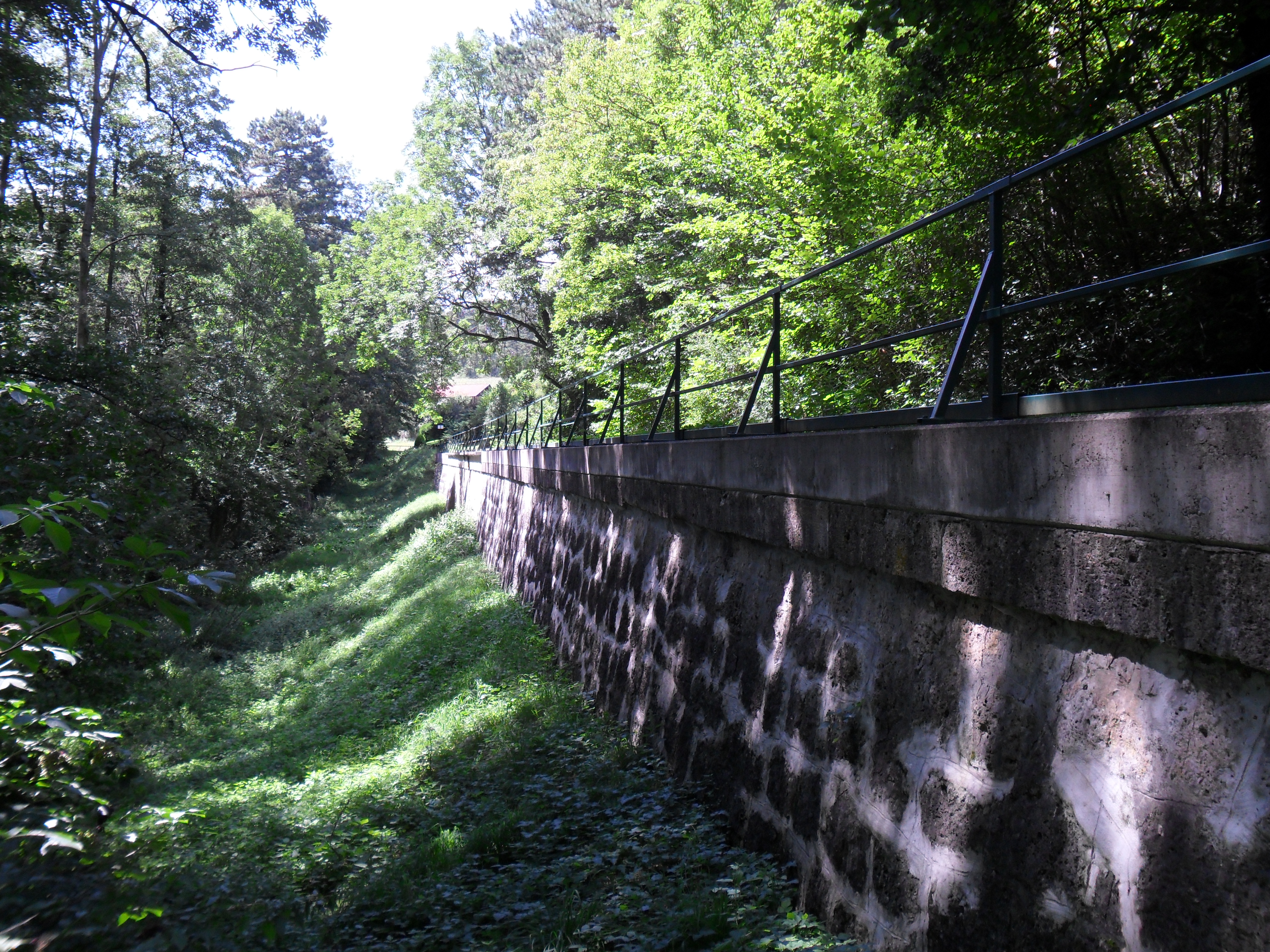
Even longer is the second high source line. It brings water from the High Swabian region to Vienna over about 180 kilometres and can transport up to 217 million liters per day. For this route, the water takes about 36 hours. On its way, it passes through numerous tunnels, canals and aqueducts.
A glass of water you drink in Vienna can therefore have a journey behind you that is longer than many a day trip.
Arriving in Vienna, the water is stored in large water containers. In total, there are 29 containers within Vienna and two more outside the city. Together they can absorb around 1.6 billion liters of water. This corresponds approximately to the average Viennese water consumption of four days. After that, the last part of the journey begins. More than 3,000 kilometres of public water pipes distribute drinking water through the city to houses and apartments.

How water comes to Vienna almost without pumps
The fact that water is transported over more than one hundred kilometres initially sounds like an enormous amount of energy. However, the Vienna high spring water is exactly the opposite.
The sources are significantly higher than Vienna. The high spring pipelines were designed so that the water can flow through the natural slope towards the city. Gravity takes over a large part of the work. No pumps are needed to transport the high source water from the Alps to Vienna.
Within Vienna, the altitude also plays an important role. Large water containers are located above the areas that supply them. The resulting water pressure ensures that the water reaches the buildings in many parts of the city without additional pumps.
The system has another advantage. Because the water supply works largely by natural gravity, it is also preserved in the event of a major power failure for the majority of Viennese households.
An infrastructure whose basic principle was planned in the 19th century thus has an advantage that today again seems surprisingly modern.
What makes Vienna tap water so special
What is crucial is not only the transport of water, but also the protection of its origin. The source areas of the two high source lines together cover about 675 square kilometres. They are even bigger than Vienna itself. Special safeguards apply in these areas to minimise the amount of pollutants released into the water.
The water seeps through soil and rock layers and later emerges as spring water. These natural conditions contribute significantly to its quality. The high source water has a comparatively low content of calcium and magnesium and thus a low to moderate water hardness.
However, Vienna is not entirely dependent on the high springs. Water supply also includes groundwater wells in Vienna and Lower Austria. Above all, they serve to additionally secure the supply.
Today, all this is self-evident. You turn the tap up and the water is there. Behind this, however, is a huge system of protected Alpine regions, kilometres of pipelines, aqueducts, water tanks and more than 3,000 kilometres of pipe network.
For the next glass of Viennese tap water, it is therefore perhaps worth a short thought of where this journey began. Very likely farther away than you would suspect when looking at your own faucet.
Sources City of Vienna, Vienna Water MA 31 as well as official information on the Vienna High Source pipelines, water tanks and the pipe network. As of September 2026.