Vienna's Pharmacies and Their Hidden Underworld
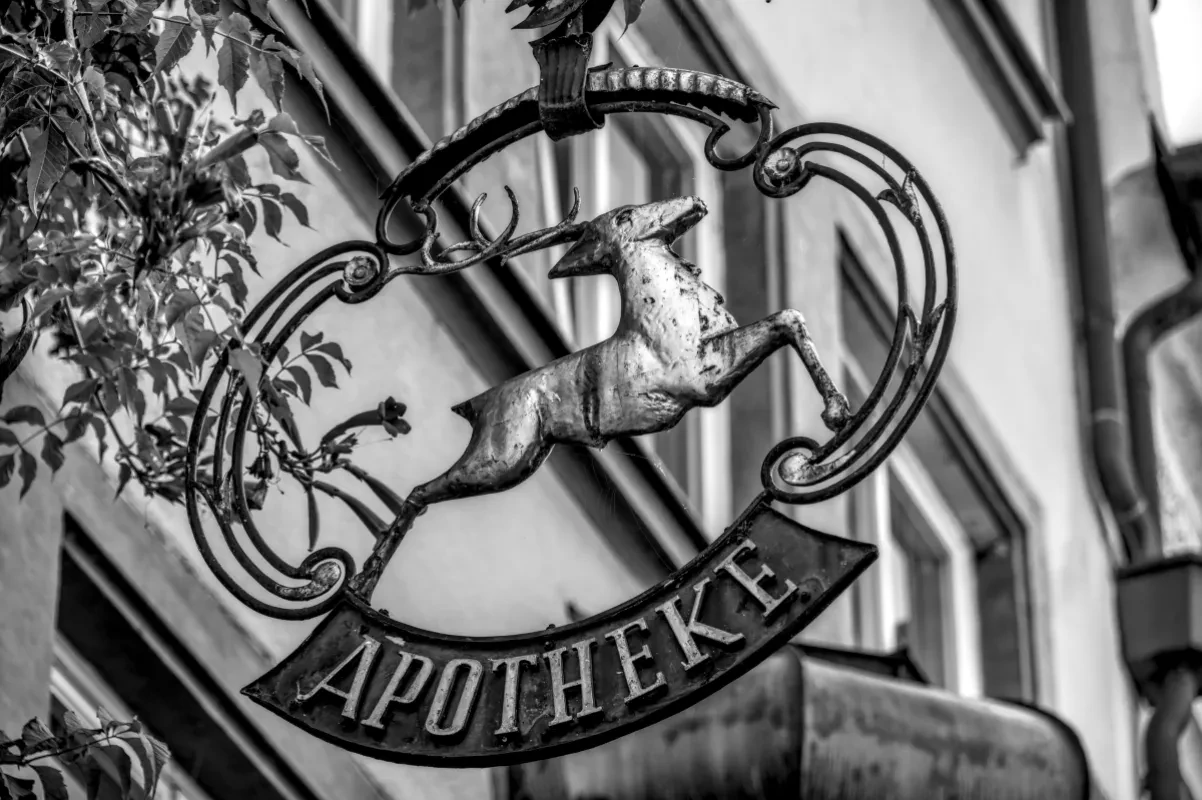
Crabs, angels and deer over the door
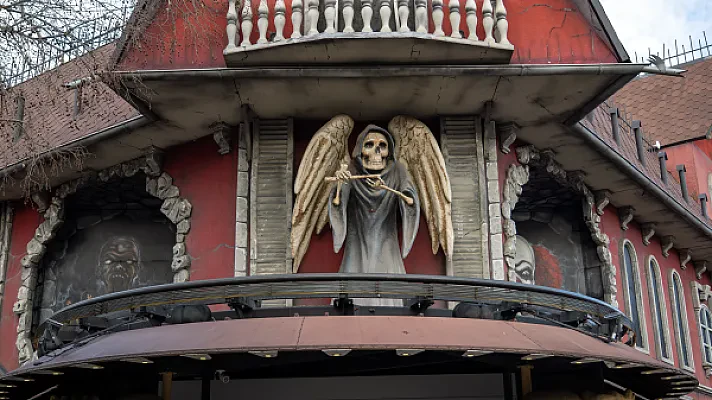
The red cancer, the white angel, the golden deer. If you go through the city center of Vienna, you will pass pharmacies whose names sound like a fairy tale book. There is a very practical idea behind this. Long before there were house numbers, a shop was recognized by its sign over the door, by an animal, a saint or an angel.
Some of these pharmacies have been around for over 500 years. They tell of strict rules about how many pharmacies there could be, of a miracle cure made of snake meat and opium and of cellars in which herbs, tinctures and medicines stored cool and dark.
The oldest pharmacies in Vienna
Already in the early 14. In the 19th century, the names of pharmacists appear in Viennese sources. The oldest pharmacy in Vienna is the Old Field Pharmacy at Stephansplatz. Already around 1320 her first owner is occupied with a certain Albrecht, and until about 1717 she was still called Zum goldenen Greif. Soon others followed, which still exist today. The Golden Hirschen existed at the latest at the beginning of the 15. century, then still at the Graben, today at the Kohlmarkt. Zum roten Krebs was founded around 1435 and is today located on the Hohe Markt. The white angel was probably created around 1440 and has had its seat in Bognergasse since 1902, where a mosaic by Oskar Laske shows the eponymous angel above the Art Nouveau portal. In the 16th century, other pharmacies were added, such as Zum Heilige Geist and Zum weißen Storch. The imperial court was supplied by the court pharmacy, which only closed in 1991.
The pharmacists were under strict supervision of the doctors. In 1404, the pharmacy system first appeared in the files of the medical faculty, and in 1405 it proposed a first pharmacy regulations. Pharmacies should be checked regularly, give medicines only by doctor's prescription and adhere to fixed prices. In 1564, the number of pharmacies in the city was fixed at ten, later at eleven.
First Emperor Joseph II. opened the shop. In 1782 he rescinded the board of pharmacists, and immediately eleven new pharmacies arose in the city and thirteen in the suburbs. With the growing city it continued uphill. In 1837 Vienna counted 17 pharmacies in the city and 24 in the suburbs, after the First World War there were already 208.
Theriak, the miracle cure of vipers and opium
No means has shaped the old pharmacies as the Theriak. Originally intended as an antidote, it was considered a panacea for centuries and was even used against the plague. Its history dates back to antiquity. King Mithridates is said to have refined it, and Andromachus, the personal physician of Emperor Neros, mixed from it a medicine of 64 components.
It contained pretty much everything that the medicine of the time had to offer. Opium, honey and wine, valerian, angelica, cinnamon and myrrh and as the most famous ingredient meat of vipers. Over time, the list in some places grew to hundreds of ingredients. The most important center was Venice, where the Theriak was touched in a ceremony lasting several days before the highest dignitaries of the city.
Also in Vienna the Theriak was indispensable. In 1570 the medical faculty of the university had a list of permitted medicines compiled, the so-called dispensarium for the Viennese pharmacists. It describes several theriac recipes with over 60 ingredients and even patches of theriac against the bumps of the plague. The work was used at the faculty until 1822, and recipes for Theriak were still in the official pharmacopoeias in the 19th century.
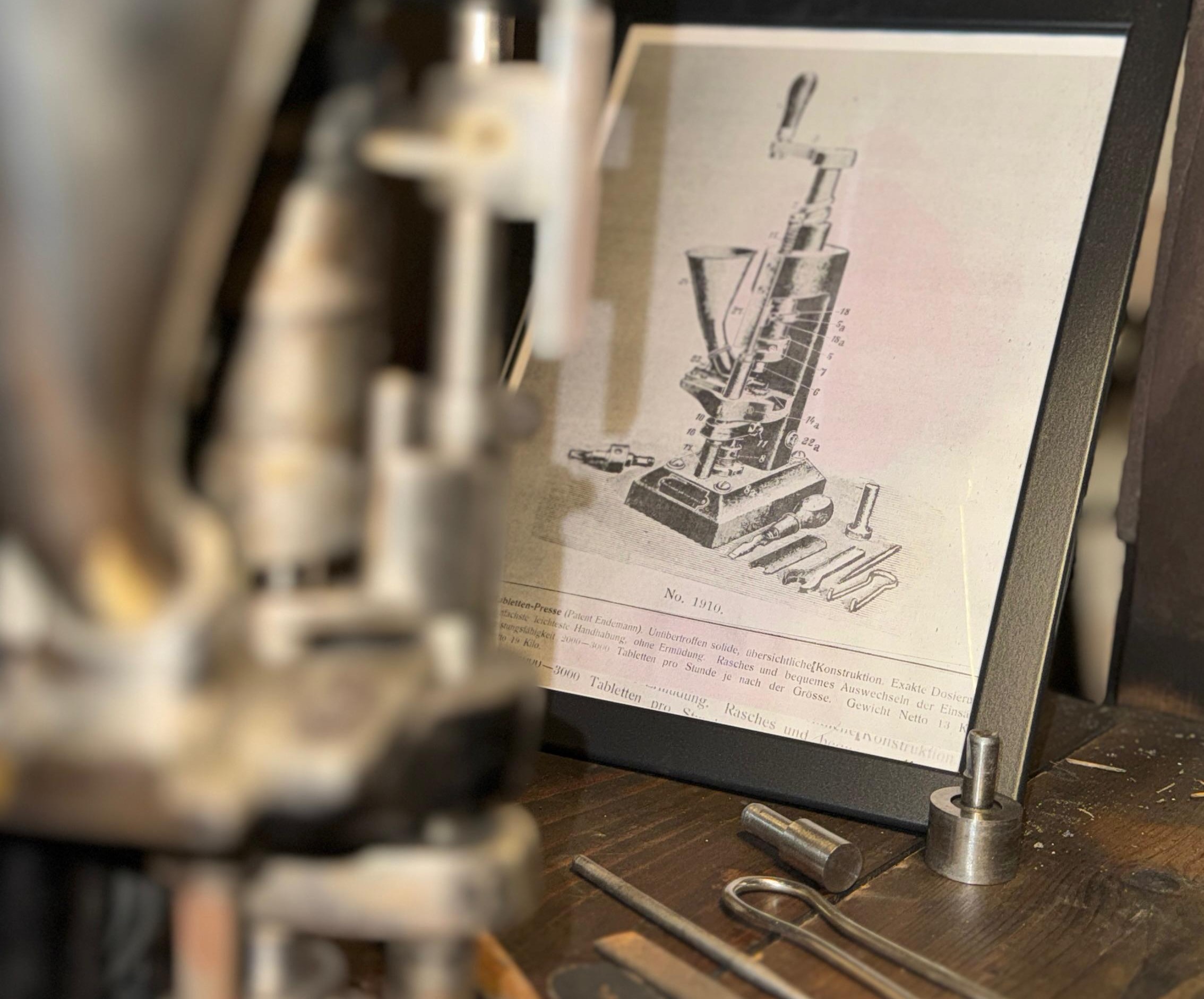
From mortar to tablet
For a long time, a pharmacy was primarily a workshop. At the front of the sales room was the recipe table on which medicines were weighed and mixed. Behind it were pantry, herbal floors and a laboratory with distillation equipment, where tinctures, ointments and pills were produced by hand. What exactly belonged in a medicine, regulated official pharmacopoeias, which existed in Vienna from 1729.
In the 19th century, this craft fundamentally changed. The city grew rapidly, with it the number of pharmacies, and more and more medicines were no longer mixed in the back room, but produced in factories. Mortars, scales and tincture bottles gradually disappeared from everyday life. But in some houses they have survived, well stowed in a place that hardly anyone thought of.
Treasures among pharmacies
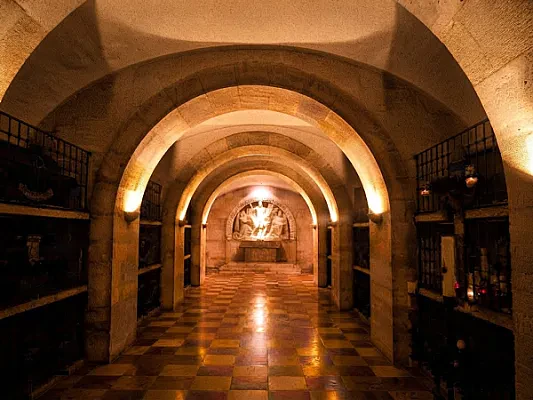
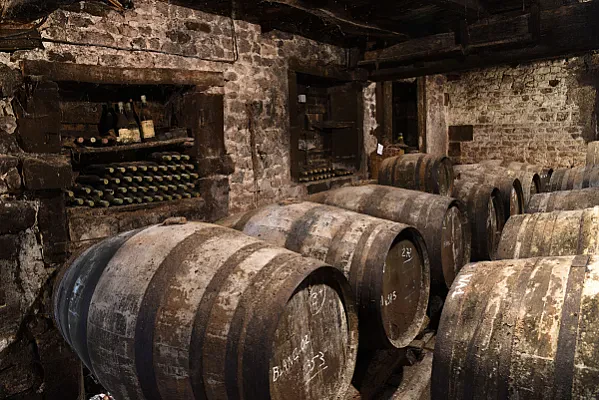
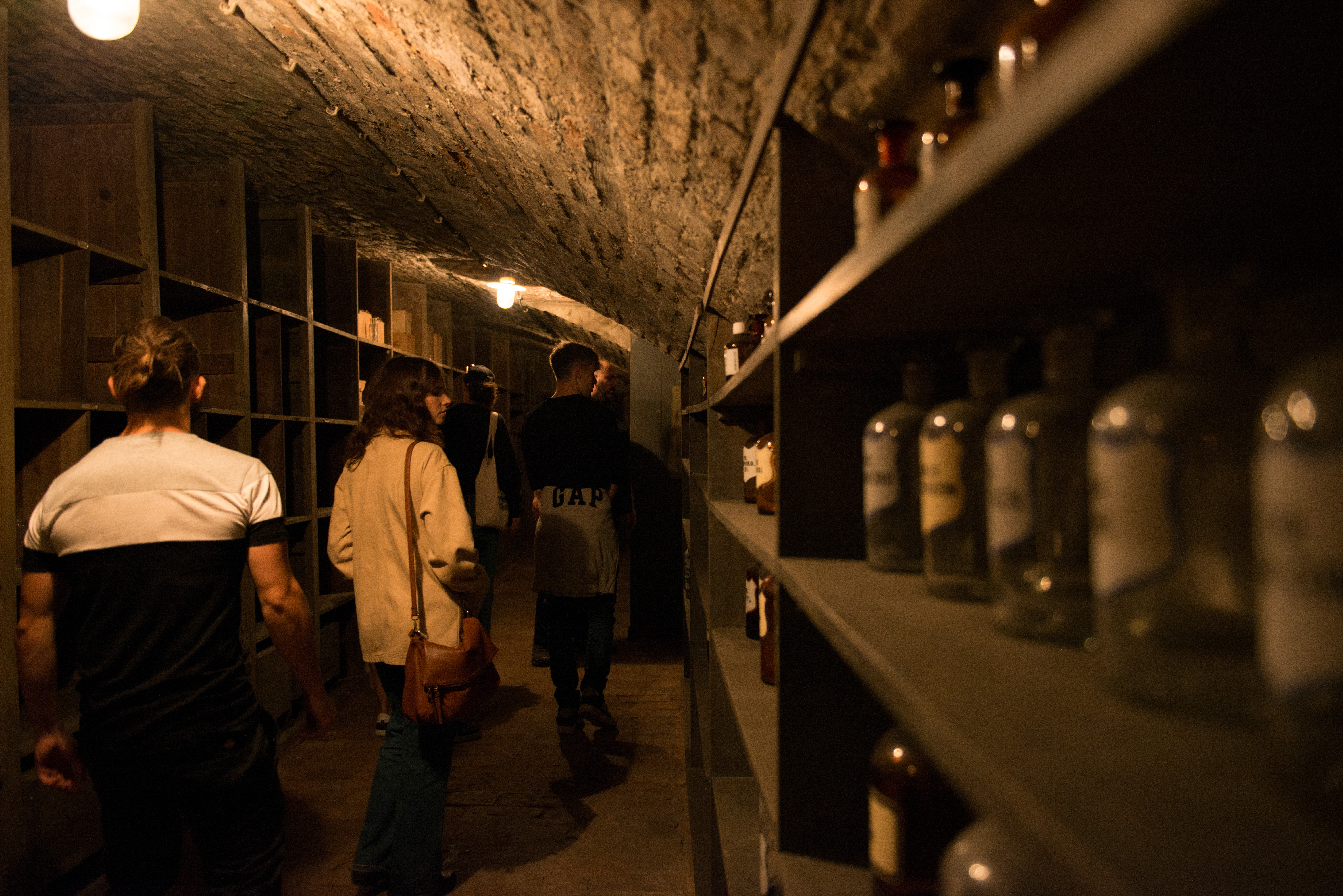
Herbs, tinctures and supplies needed a cool, dark place, and the pharmacist found it in the cellar. Some of these cellars are still true treasure chambers. The pharmacy Zum goldenen Reichsapfel in Singerstraße, for example, was founded in 1782, right after the reform of Joseph II. Your basement, like many in the city center, extends two floors into the depth, with extensive brick arches. There, old pharmacy vessels and equipment are stored, and in one of the vaults, a dark hole gaps, around which the legend of the nun hole stands. Even a human vertebral bone was found in the basement and today belongs to the collection of the pharmacy.
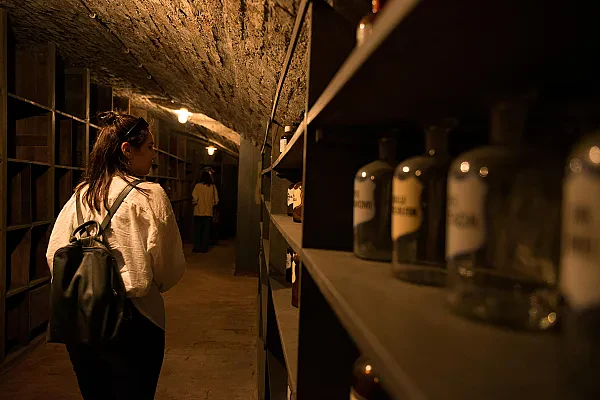
Another cellar is located in the 4th district, not far from Karlsplatz, under a pharmacy from 1857. Since its foundation, equipment, medicines and books have been stored here, and much of it has remained. In four cellar rooms are thousands of standing vessels from over 160 years, old mortars, percolators for tinctures and a pill board on which pills were still turned by hand. In addition, there are devices with which urine and drinking water were examined in the 19th century, weights for old units such as gran, drachma and scruples and rarities such as goat blood. During the Second World War, the basement also served as an air protection room.
Guided tour of the historical pharmacy cellar
SourcesVienna History Wiki, Pharmacies·Vienna History Wiki, Pharmacy·Vienna History Wiki, Old Field Pharmacy·Vienna History Wiki, To the Golden Hirschen·Vienna History Wiki, To the Red Cancer·Vienna History Wiki, To the White Angel·Vienna History Wiki, court pharmacy·Old field pharmacy, history·Pharmacy for the golden imperial apple, stories·Pharmacy Adhoc, pharmacies treasure chest under Vienna·Museums.de, Arzneimittelkeller·Vienna University Library, Dispensarium for Viennese Pharmacists·DeWiki, Theriak·Vienna is different, Apothekenkeller